Does turkey make you sleepy?
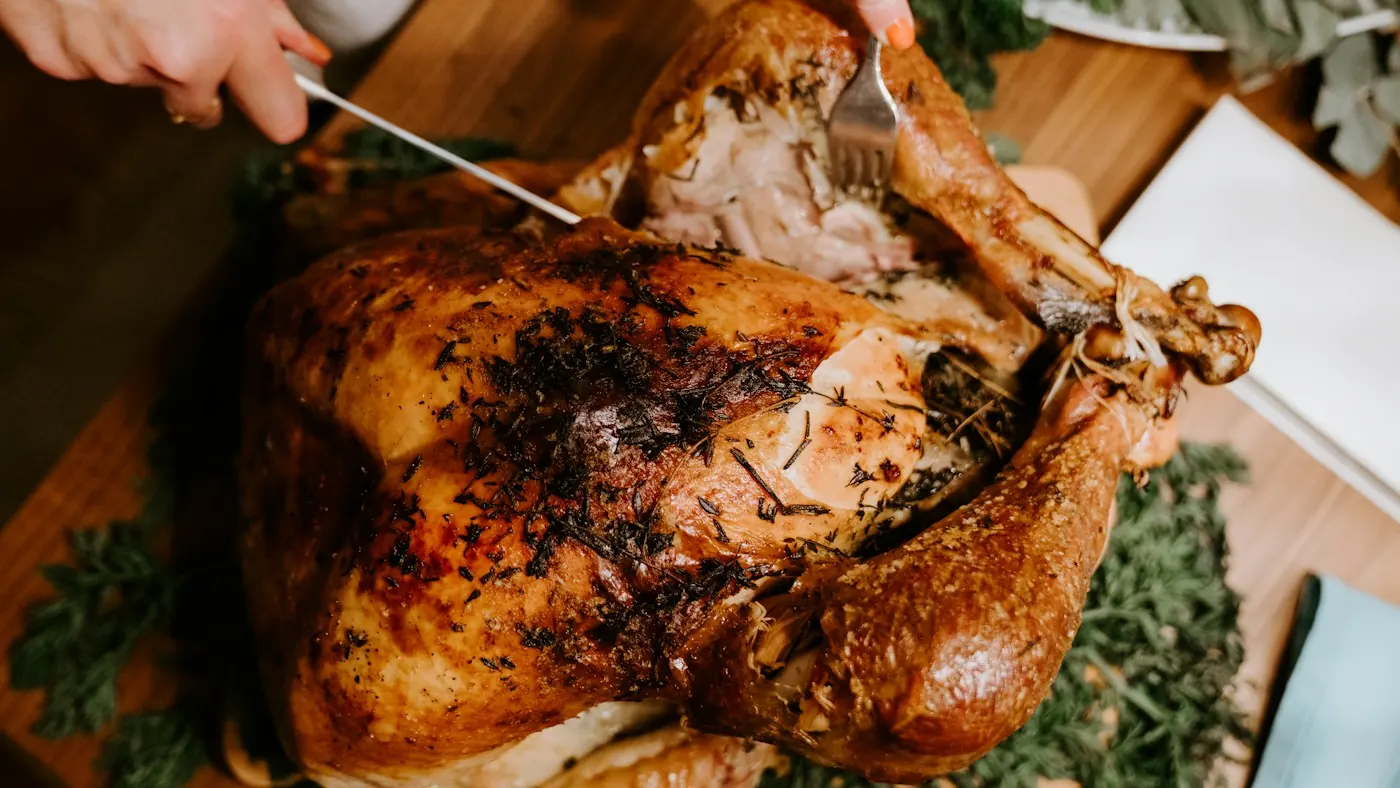
Not really. Turkey has no more tryptophan than chicken or beef. A big meal, lots of carbs and a few drinks are more likely to make you sleepy.
Turkey has about the same tryptophan as chicken or beef, and a protein-rich meal doesn't flood your brain with it. Feeling sleepy after a feast is better explained by a big meal, lots of carbs and alcohol. The idea is that turkey is full of tryptophan, which the body uses to make serotonin and melatonin. But turkey, chicken and minced beef all have similar amounts, about 350 mg per 115 g, and pork and cheese have more per gram. Studies that made people sleepy used about 1 g or more of pure tryptophan as a supplement. In a small trial, a protein-rich breakfast actually lowered the blood measure that controls how much tryptophan reaches the brain, while a carb-rich breakfast raised it. Large meals in general made people sleepier: in a driving simulator, a heavy lunch led to more drowsy lane drifting than a light one.
Who this applies to: Healthy adults after a normal holiday-style meal. It doesn't cover tryptophan supplements, which are a different question, or people with sleep disorders.
Limited evidenceNo study has tested turkey itself against other meats for sleepiness. The evidence comes from a review of tryptophan supplement trials, a few small meal trials, and food-content comparisons. They all point the same way, but each study is small.
Eat a lighter meal when you need to stay alert
In a driving simulator, a heavy 922-calorie lunch caused more sleepiness than a light 305-calorie one.
Some evidence · Reyner et al. 2012Don't drive if you feel drowsy after a big meal, especially after a short night
Drowsy lane drifting rose after a heavy lunch in sleep-restricted drivers, starting about 30 minutes into the drive.
Some evidence · Reyner et al. 2012Go easy on alcohol with a big meal
Large meals, carbohydrates and alcohol are better explanations for after-dinner drowsiness than turkey.
Weak evidence · Vreeman & Carroll 2007 Free full text
What are the key numbers?
Which studies is this answer based on?
- Silber, B. Y., & Schmitt, J. A. (2010). Effects of tryptophan loading on human cognition, mood, and sleep. Neuroscience and Biobehavioral Reviews. doi:10.1016/j.neubiorev.2009.08.005
What does this mean for you?
- Tryptophan has to compete with other amino acids to get into the brain. A protein-heavy meal brings lots of competitors, so less tryptophan gets in, not more.
- Carbohydrates help tryptophan into the brain, which may be one reason big, starchy meals make some people drowsy.
- Meal size seems to matter on its own: bigger meals made people sleepier.
- The carbs-raise-serotonin idea started with rat experiments, which can't tell us how people react to a turkey dinner.
What did the studies find?
- Silber 2010 (review of tryptophan-loading trials): sleep effects came mainly from about 1 g or more of pure tryptophan, with benefits mostly in poor sleepers; effects in healthy people were inconsistent.
- Vreeman 2007 (BMJ): turkey, chicken and minced beef have similar tryptophan, about 350 mg per 115 g; pork and cheese have more per gram.
- Wurtman 2003: in a small crossover study, a protein-rich breakfast lowered the blood tryptophan ratio by up to 35%, while a carb-rich breakfast raised it by up to 14%.
- Afaghi 2007: in 12 healthy men, a high-GI rice meal 4 hours before bed cut the time to fall asleep to 9.0 minutes versus 17.5 minutes after a low-GI meal.
- Reyner 2012: in 12 sleep-restricted young men in a driving simulator, a 922-calorie lunch caused more drowsy lane drifting than a 305-calorie lunch, starting after about 30 minutes.
How was the main study done?
Main evidence: Silber & Schmitt (2010), Neuroscience and Biobehavioral Reviews
- Design
- Systematic-style review of tryptophan-loading studies
- Sample
- Mostly small placebo-controlled trials
- Who was studied
- Healthy adults and people with sleep problems
- Duration
- Mostly single doses or short courses
- Comparison
- Pure tryptophan vs placebo
- Who paid for it
- Both authors worked at the Nestlé Research Centre (a food company); funding not stated. The review also didn't pool results or score study quality.
What does the rest of the evidence say?
This sets the bottom line.
Meta-analysis or systematic review
What should you do?
- Eat a lighter meal if you need to stay alert.
- Don't drive if you feel drowsy after a big meal.
- Go easy on alcohol with a big meal.
What are the main takeaways?
- Turkey isn't special: other meats and cheese have as much tryptophan or more.
- Big meals, lots of carbs and alcohol are better explanations for feeling sleepy.
- Tryptophan only had clear effects as a pure supplement.
What are the limits of this evidence?
- No study has compared turkey with other foods for sleepiness.
- The meal trials were tiny, mostly in young men.
- The main review was written by food-company scientists and didn't pool results.
- Alcohol's role at feasts comes from a narrative review, not a trial.
Educational summary, not medical advice. Talk to a clinician about your own health.