Do carrots improve your eyesight?
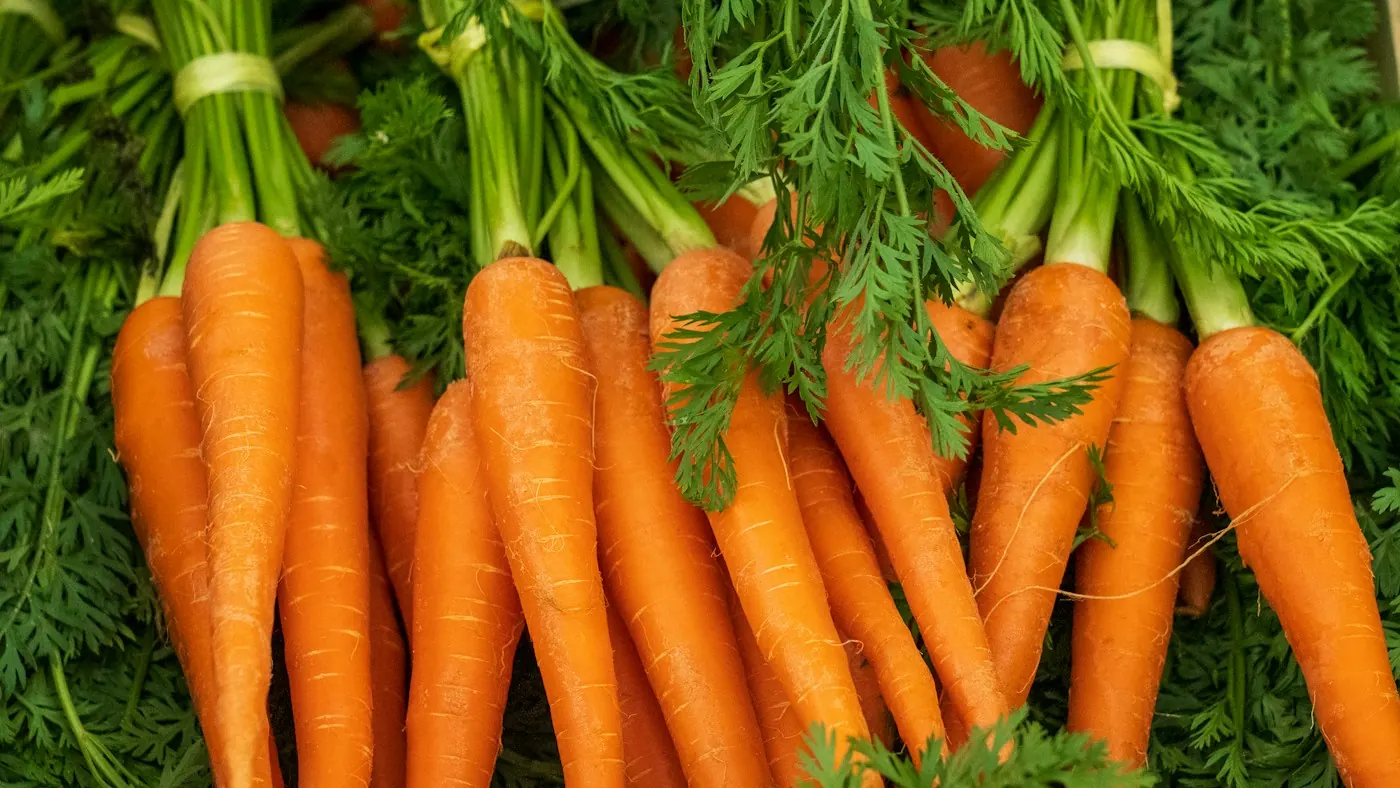
Only if you're low in vitamin A. Carrots can fix poor night vision caused by a lack of vitamin A, but they won't give you sharper eyes.
Carrots help your eyes only if you're short on vitamin A. In night-blind women lacking vitamin A, daily carrots restored night vision, but there's no evidence they sharpen normal eyesight. Your eyes need vitamin A to see in dim light, and carrots contain beta-carotene, which the body turns into vitamin A. When people don't get enough vitamin A, they can develop night blindness. In a trial in Nepal, 380 pregnant women with night blindness ate carrots, other vitamin A foods or took vitamin A capsules for 6 weeks. Their night vision recovered to the level of women without night blindness, and carrots worked as well as capsules. Large reviews show vitamin A supplements cut night blindness and deaths in young children in regions where deficiency is common. But no study shows that eating more carrots gives better-than-normal vision to people who already get enough vitamin A.
Who this applies to: The benefit applies to people who are low in vitamin A, which is common in some low-income regions and rare in well-fed populations. If your night vision gets worse, see a doctor or eye specialist rather than treating it with carrots.
Moderate evidenceA randomized trial in night-blind women that included carrots, a Cochrane review of 47 trials of vitamin A in children, and large eye-supplement trials in older adults. The evidence is strong that vitamin A fixes deficiency, but no trial shows carrots improve normal vision.
Make sure your overall diet covers vitamin A
Vision problems come from a lack of vitamin A. In night-blind women, several different foods and capsules all restored night vision equally well.
Some evidence · Haskell et al. 2005 Free full text, Imdad et al. 2022 Free full textSee a doctor if your night vision gets worse
Night blindness can be a sign of vitamin A deficiency, which is treatable, or of other eye problems that need checking.
Some evidence · Imdad et al. 2022 Free full text, Haskell et al. 2005 Free full textIf you're over 55 with signs of macular degeneration, ask your eye doctor about the AREDS formula
In 3,640 older adults, high-dose antioxidants plus zinc lowered the odds of advanced macular degeneration in people already at risk; people at low risk got little benefit.
Some evidence · AREDS Research Group 2001 Free full text, AREDS2 Research Group 2013
What are the key numbers?
Which studies is this answer based on?
- Haskell, M. J., Pandey, P., Graham, J. M., et al. (2005). Recovery from impaired dark adaptation in nightblind pregnant Nepali women who receive small daily doses of vitamin A as amaranth leaves, carrots, goat liver, vitamin A-fortified rice, or retinyl palmitate. American Journal of Clinical Nutrition. doi:10.1093/ajcn.81.2.461 · Free full text
What does this mean for you?
- Vitamin A is needed to make the pigment that lets your eyes adjust to dim light. Without enough, night vision suffers.
- Carrots worked as well as vitamin A capsules for night-blind women in Nepal, so food sources really can fix deficiency.
- The big benefits of vitamin A, fewer deaths and less night blindness, were seen in children in regions where deficiency is common, not in well-fed people.
- High-dose antioxidant pills (including beta-carotene) plus zinc slowed one eye disease, advanced macular degeneration, in older people already at risk. That's a medical treatment for a specific condition, not a way to boost normal vision.
What did the studies find?
- Haskell 2005: 380 night-blind pregnant women in Nepal randomized to 6 groups for 6 weeks (vitamin A as capsules, fortified rice, goat liver, amaranth leaves or carrots); dark adaptation improved from 0.71 to 1.42 log cd/m² (P < 0.0001), matching non-night-blind women (1.43). Improvement didn't differ between carrots, liver, leaves and capsules.
- Imdad 2022 (Cochrane): 47 trials in about 1.2 million children aged 6 months to 5 years; vitamin A cut deaths by 12% (RR 0.88, 0.83-0.93) and night blindness by about two-thirds (RR 0.32, 0.21-0.50).
- Sommer 1986: 25,939 children in 450 Indonesian villages; deaths were 4.9 per 1,000 in supplemented villages vs 7.3 per 1,000 in control villages.
- AREDS 2001: 3,640 adults aged 55 to 80 for 6.3 years; antioxidants plus zinc lowered the odds of advanced macular degeneration (OR 0.72), while people at low risk got little benefit.
- AREDS2 2013: 4,203 adults at risk of macular degeneration; adding lutein/zeaxanthin or omega-3 to the formula didn't further reduce progression.
How was the main study done?
Main evidence: Haskell et al. (2005), American Journal of Clinical Nutrition
- Design
- Randomized trial with 6 vitamin A groups, plus a comparison group of women without night blindness
- Sample
- 380 night-blind pregnant women (and 128 comparison women)
- Who was studied
- Pregnant women in Nepal with vitamin A-related night blindness
- Duration
- 6 weeks (6 days a week)
- Comparison
- Vitamin A from carrots, amaranth leaves, goat liver, fortified rice or capsules
- Who paid for it
- Charity funding
What does the rest of the evidence say?
This sets the bottom line.
Randomized trial
What should you do?
- Eat a varied diet that covers vitamin A.
- See a doctor if your night vision gets worse.
- Don't expect extra carrots to replace glasses.
What are the main takeaways?
- Carrots can fix night blindness caused by low vitamin A.
- They don't give normal eyes better vision.
- Worsening night vision is a reason to see a doctor.
What are the limits of this evidence?
- The carrot trial was in vitamin A-deficient pregnant women in Nepal, so it doesn't apply to well-fed people.
- It had no placebo group, only different sources of vitamin A.
- The child supplement trials tested capsules, not carrots.
- No trial has tested whether carrots improve eyesight in people with normal vitamin A levels.
Educational summary, not medical advice. Talk to a clinician about your own health.