Does a greasy breakfast cure a hangover?
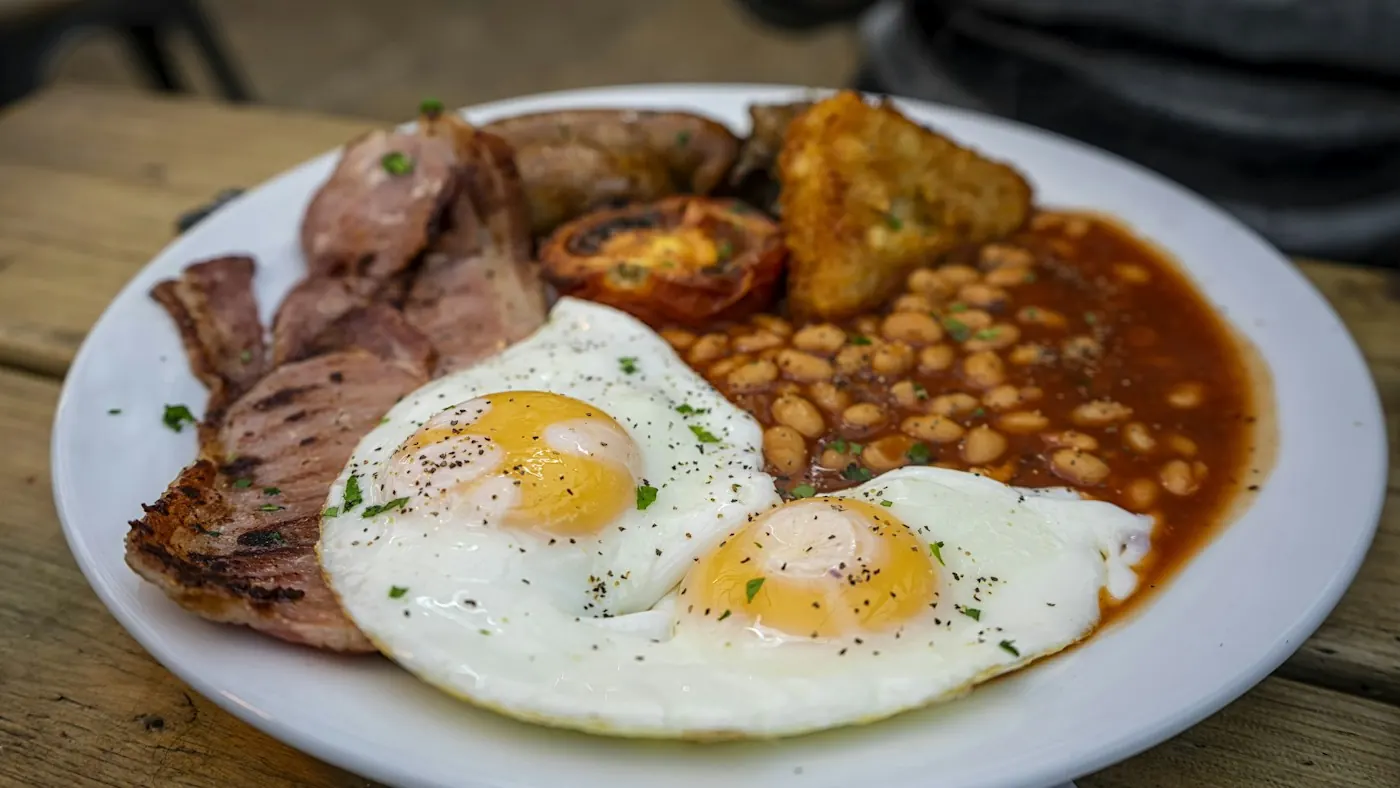
No. A fry-up the morning after has never been shown to cure a hangover. Food does help, but mainly when you eat it before and while you drink.
No trial has tested a greasy breakfast as a hangover cure. Food helps most when it's in your stomach before and while you drink, because it lowers how high your blood alcohol climbs. A 2022 review gathered every placebo-controlled trial of hangover remedies (21 trials, 386 people). None tested a fry-up or any greasy meal, and even the remedies that were tested had only very low quality evidence. What is well shown is that food eaten before drinking keeps blood alcohol lower. In 10 men, drinking after breakfast gave a peak blood alcohol of 67 mg/dL, compared with 104 mg/dL on an empty stomach, and the alcohol was cleared about 2 hours sooner. A second small study found peak breath alcohol was 21.5% lower after a large meal. A 2022 diary study of 605 young adults found people ate more hot chips and drank more soft drinks on their worse hangover days, which suggests hangovers drive cravings for greasy food, not that greasy food fixes hangovers. Older trials found that sugar taken after drinking didn't change hangover symptoms.
Who this applies to: Healthy adults after a single night of drinking. If you are vomiting a lot or can't keep food or fluids down, seek medical help.
Limited evidenceA strong 2022 systematic review found no placebo-controlled trial of a greasy breakfast or any meal as a hangover cure. Small, careful lab studies show food before drinking lowers blood alcohol, but they measured blood alcohol, not hangover symptoms.
What actually works: drink less, or pace yourself; eat a meal before and while you drink; sleep it off and give it time. See the evidence →
What are the key numbers?
Which studies is this answer based on?
- Roberts, E., Smith, R., Hotopf, M., & Drummond, C. (2022). The efficacy and tolerability of pharmacologically active interventions for alcohol-induced hangover symptomatology: A systematic review of the evidence from randomised placebo-controlled trials. Addiction. doi:10.1111/add.15786 · Free full text
What does this mean for you?
- Food slows how fast alcohol leaves your stomach and reaches your blood, so the timing matters: before and during drinking, not the morning after.
- People crave greasy food when they're hungover. That explains why the fry-up feels like a cure, but craving it isn't evidence it works.
- Lab studies that claim certain foods "break down alcohol" are often test-tube results that have never been tried in people.
What did the studies find?
- Roberts 2022 (systematic review): 21 placebo-controlled trials with 386 people; all efficacy evidence was very low quality, and none tested a greasy breakfast or any meal.
- Jones & Jönsson 1994: in 10 men, peak blood alcohol was 67 mg/dL after breakfast vs 104 mg/dL fasting, and the same dose was cleared about 2 hours sooner. A meal eaten 5 hours after drinking sped up alcohol clearance by 36 to 50%, but hangover symptoms weren't measured.
- Watkins 1993: in 9 volunteers, peak breath alcohol was 21.5% lower after a large meal; the time until breath alcohol reached zero was about the same (5.01 vs 5.05 hours).
- Gentry 2000 (review): food eaten before drinking always lowers blood alcohol, mainly by holding alcohol in the stomach longer.
- Morley 2022: 605 young adults kept a daily diary for 13 days; on worse hangover days they ate more hot chips and soft drinks and less fruit.
- Wiese 2000 (review): trials of sugar after drinking didn't change hangover symptoms, including one in 109 men.
How was the main study done?
Main evidence: Roberts et al. (2022), Addiction
- Design
- Pre-registered systematic review of randomized placebo-controlled trials, with GRADE quality ratings
- Sample
- 21 trials, 386 people
- Who was studied
- Adults with alcohol-induced hangover
- Duration
- Single drinking episodes; searches up to August 2021
- Comparison
- Each remedy vs placebo
- Who paid for it
- Public/academic funding
What does the rest of the evidence say?
This sets the bottom line.
Meta-analysis or systematic review
What should you do?
- Drink less, or pace yourself: it's the only proven way to avoid a hangover.
- Eat a meal before you start drinking, and keep eating while you drink.
- Give it time and get some sleep; the hangover fades as your body recovers.
What are the main takeaways?
- No trial shows a fry-up cures a hangover.
- Food helps most before and while you drink.
- How much you drink is what decides the hangover.
What are the limits of this evidence?
- The food studies were small (9 to 10 people) and measured blood alcohol, not hangover symptoms.
- The diary study shows what hungover people eat, not whether that food helps.
- Studies were mostly in young, healthy adults.
Educational summary, not medical advice. Talk to a clinician about your own health.