Does reading in dim light ruin your eyes?
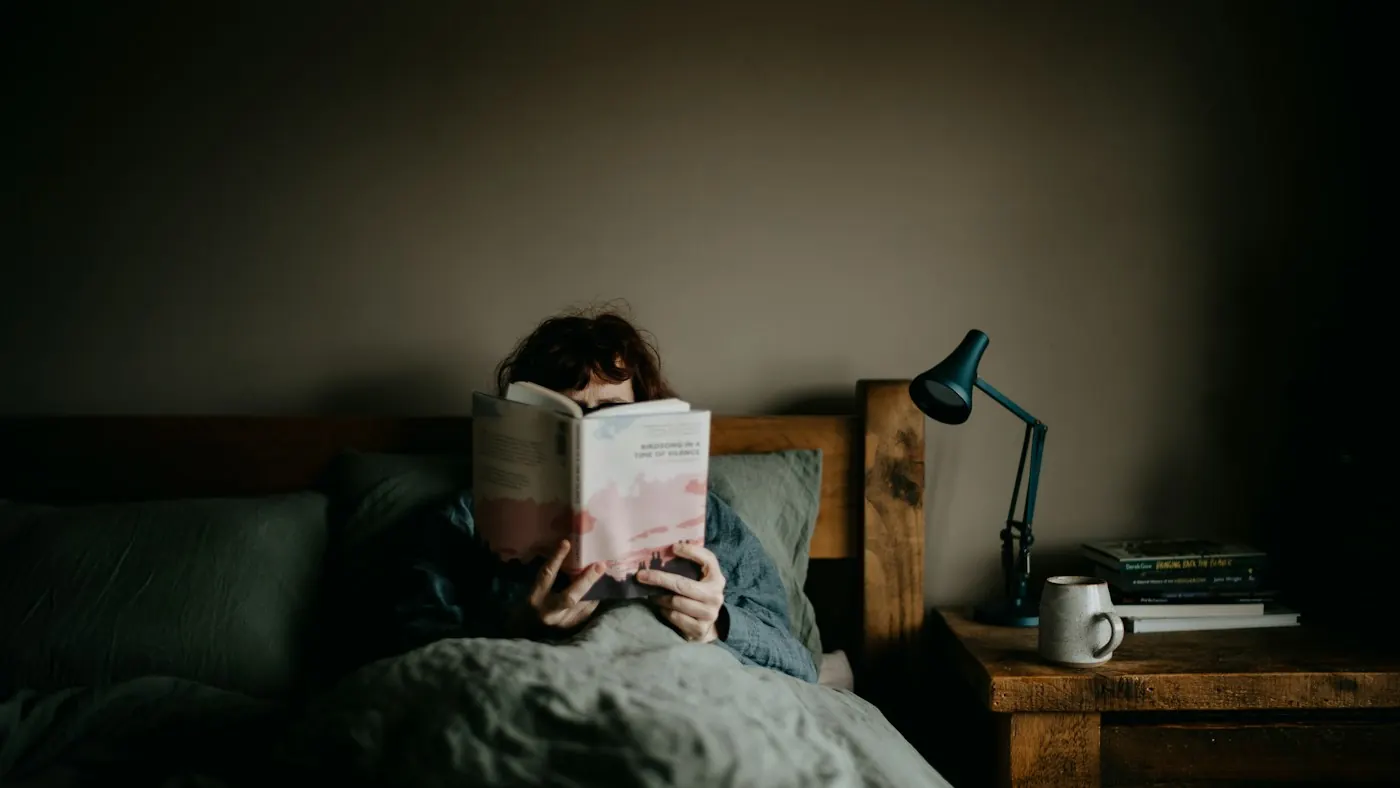
No. Dim light can tire your eyes for a while, but it doesn't damage them.
Reading in dim light can make your eyes tired and uncomfortable for a while, but there's no evidence it causes lasting damage. For children's eyes, time spent outdoors in daylight matters more. When you read in poor light, your eyes work harder to focus and you blink less, which can cause tired, dry or sore eyes. These effects go away with rest and don't damage your eyesight, according to a BMJ review of common medical myths. What does affect children's eyes is how they spend their time. A review of 27 studies found that children who did more close-up work, like reading, were slightly more likely to become short-sighted. In a large trial in China, adding one 40-minute outdoor class to each school day cut new cases of short-sightedness over 3 years from 39.5% to 30.4%. The light that seems to protect eyes is bright daylight outdoors, not a brighter reading lamp.
Who this applies to: Healthy children and adults. If blurry vision, eye pain or headaches don't go away after rest, see an eye doctor or optometrist.
Limited evidenceNo study has directly tested whether dim reading light causes lasting eye damage. The no-harm answer rests on expert reviews of eye strain. The evidence on outdoor time is strong (two school-based randomized trials), and the near-work link comes from 27 mostly observational studies.
Get children outdoors in daylight every day
In a 3-year trial of 1,903 children, one extra 40-minute outdoor class a day cut new short-sightedness from 39.5% to 30.4%. A second trial found bright outdoor light was what helped.
Strong evidence · He et al. 2015, Wu et al. 2018Break up long stretches of reading or screen time
More close-up work is linked to slightly higher odds of short-sightedness in children, and focusing up close for a long time is a common cause of eye strain.
Weak evidence · Huang et al. 2015 Free full text, Sheppard & Wolffsohn 2018 Free full textSee an eye doctor if blurry vision doesn't clear after rest
Eye strain from close work is temporary, so blur that lasts points to something else, like short-sightedness, that's worth checking.
Weak evidence · Vreeman & Carroll 2007 Free full text, Rosenfield 2011
What are the key numbers?
Which studies is this answer based on?
- Vreeman, R. C., & Carroll, A. E. (2007). Medical myths. BMJ. doi:10.1136/bmj.39420.420370.25 · Free full text
What does this mean for you?
- Eye strain is real. It comes from focusing hard, blinking less and dry eyes, and it fades with rest.
- Strain from close work, whether a book or a screen, is very common: reviews estimate that at least half of computer users have it.
- Short-sightedness in children is linked to lots of close-up work and too little time outdoors. The link with near work is small; the protective effect of outdoor daylight has been shown in trials.
- A famous 1999 study linking night lights in babies' rooms to short-sightedness was based on parents' memories at one clinic, and later studies didn't confirm it.
What did the studies find?
- Vreeman & Carroll 2007 (BMJ): reading in dim light can cause temporary eye strain, such as trouble focusing, less blinking and dryness, but these effects don't last and don't damage eyesight.
- He 2015: 1,903 six-year-olds in 12 schools in Guangzhou; one extra 40-minute outdoor class per school day cut 3-year myopia incidence from 39.5% to 30.4% (difference -9.1%, 95% CI -14.1% to -4.1%).
- Wu 2018: 693 first-graders in 16 Taiwan schools for 1 year; more outdoor recess meant less myopic shift (0.35 vs 0.47 D) and 54% lower odds of rapid progression; about 11 hours a week at 1,000 lux or more appeared protective.
- Huang 2015: 27 studies in children; more near work was linked to slightly higher odds of myopia (OR 1.14, 1.08-1.20), rising 2% per extra diopter-hour per week.
- Sheppard & Wolffsohn 2018 and Rosenfield 2011: eye strain during close work affects 50% or more of computer users (64-90% report some visual symptoms) and is treatable and temporary.
How was the main study done?
Main evidence: Vreeman & Carroll (2007), BMJ
- Design
- Narrative review of common medical myths
- Sample
- Review of published evidence (no new data)
- Who was studied
- General public
- Duration
- Not applicable
- Comparison
- Claims about dim-light reading vs ophthalmology evidence
- Who paid for it
- Self-funded
What does the rest of the evidence say?
This sets the bottom line.
Review or expert commentary
What should you do?
- Get kids outdoors in daylight every day.
- Take breaks during long reading or screen time.
- See an eye doctor if blurry vision doesn't go away.
What are the main takeaways?
- Dim light tires your eyes but doesn't damage them.
- Eye strain goes away with rest.
- Daylight outdoors helps protect children's eyes.
What are the limits of this evidence?
- No study has directly tested dim reading light against lasting eye damage.
- The main source on dim light is an expert review, not new research.
- The near-work studies are mostly cross-sectional and rely on self-reports.
- The outdoor trials were in East Asian schoolchildren.
Educational summary, not medical advice. Talk to a clinician about your own health.