Does cracking your knuckles cause arthritis?
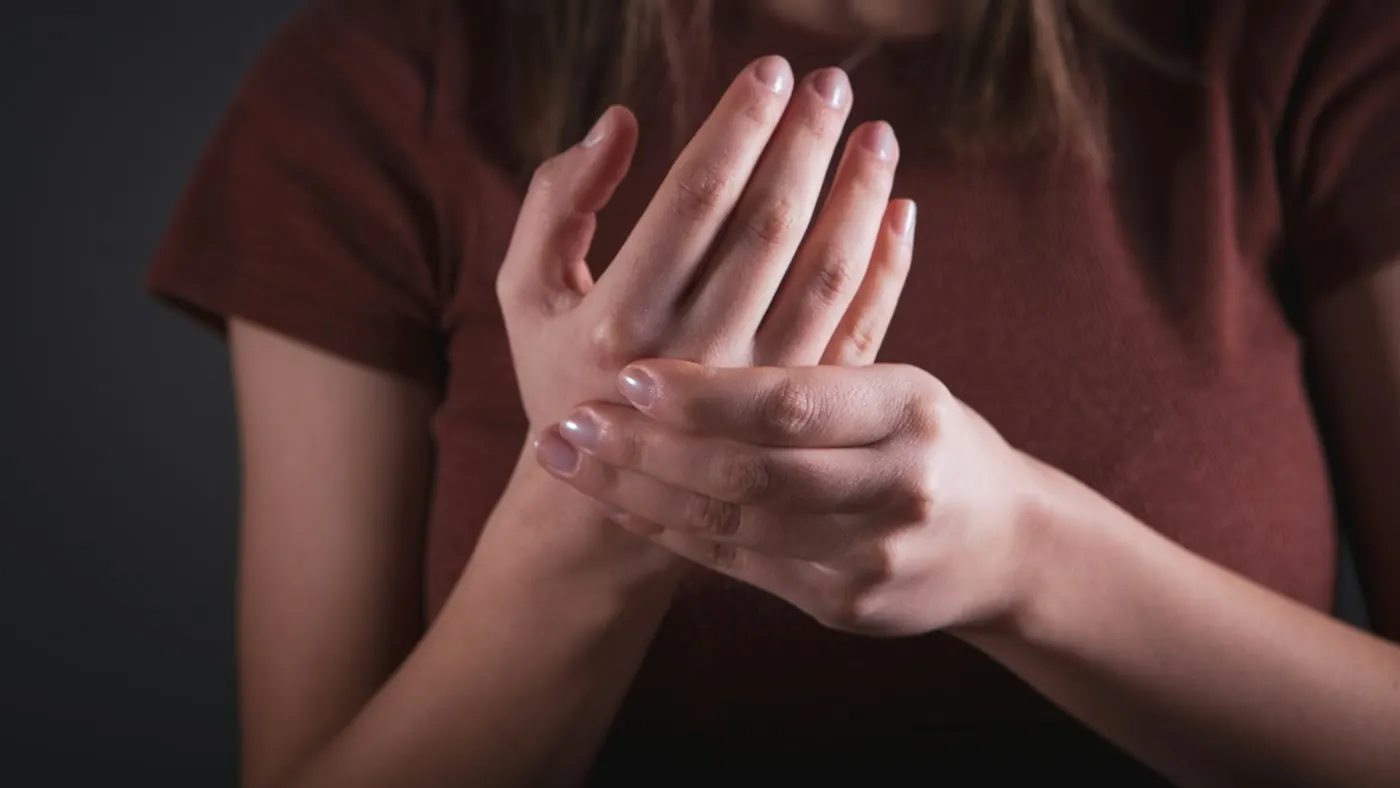
No. Studies haven't found that knuckle cracking causes arthritis.
Studies haven't found a link. In 215 people with hand X-rays, knuckle crackers had no more arthritis than people who never cracked, however long they'd been doing it. The pop you hear is a gas cavity forming in the fluid inside the joint as the joint surfaces are pulled apart. It isn't bone grinding on bone. In a 2011 study, researchers compared hand X-rays of 215 people aged 50 to 89 and asked about their knuckle cracking. Arthritis was about as common in crackers (18.1%) as in non-crackers (21.5%), and cracking for more years didn't raise the risk. An older study of 300 people also found no extra arthritis, though crackers had more hand swelling and weaker grip. A later study with blinded examiners found no swelling, grip or function differences in habitual crackers, and the joints actually moved a little more freely right after cracking.
Who this applies to: Healthy adults who crack their knuckles out of habit. It doesn't cover joints that crack along with pain, swelling or stiffness; see a doctor if that happens.
Limited evidenceA few small observational studies (215, 300 and 40 people) that all found no link to arthritis, plus lab and imaging studies explaining the sound. There are no long-term trials, and cracking habits were self-reported, but no study points the other way.
Let go of the worry if cracking doesn't hurt
In 215 people with hand X-rays, crackers had no more arthritis than non-crackers, and blinded examiners found no harm in habitual crackers' joints.
Some evidence · Deweber et al. 2011 Free full text, Boutin et al. 2017 Free full textSee a doctor if a joint is painful, swollen or stiff
Blinded checks found no swelling or loss of function from cracking, so these symptoms point to something else that's worth having looked at.
Weak evidence · Boutin et al. 2017 Free full text
What are the key numbers?
Which studies is this answer based on?
- Deweber, K., Olszewski, M., & Ortolano, R. (2011). Knuckle cracking and hand osteoarthritis. Journal of the American Board of Family Medicine. doi:10.3122/jabfm.2011.02.100156 · Free full text
What does this mean for you?
- Cracking pulls the joint surfaces apart, which drops the pressure in the joint fluid and lets gas come out of it. That's what makes the sound.
- A joint usually can't crack again for about 20 minutes.
- The studies on arthritis are small and rely on people remembering their habits, but none found a link.
- One older study linked cracking to hand swelling and weaker grip, but crackers in it also did more manual work, smoked and drank more, and a later blinded study didn't find these differences.
What did the studies find?
- Deweber 2011: 215 people aged 50 to 89 (135 with hand osteoarthritis on X-ray, 80 without); arthritis in 18.1% of crackers vs 21.5% of non-crackers (P = .548), and no link with years or total amount of cracking.
- Castellanos & Axelrod 1990: 300 clinic patients aged 45 and over; no more hand arthritis in 74 habitual crackers, but more hand swelling and lower grip strength.
- Boutin 2017: 40 adults (400 joints) examined by doctors and ultrasound readers who didn't know who cracked; no differences in hand function, laxity, grip or swelling, and joints that cracked gained about 9 degrees of movement.
- Kawchuk 2015: real-time MRI of 10 knuckle joints showed the crack happens as a gas cavity forms, not when a bubble bursts.
- Unsworth 1971: lab study showing the crack comes from gas released from joint fluid, and that about 20 minutes must pass before a joint can crack again.
How was the main study done?
Main evidence: Deweber et al. (2011), Journal of the American Board of Family Medicine
- Design
- Case-control study
- Sample
- 215 people (135 with hand osteoarthritis, 80 without)
- Who was studied
- Adults aged 50 to 89 with hand X-rays
- Duration
- Lifetime cracking history, recalled by participants
- Comparison
- Habitual knuckle crackers vs non-crackers
- Who paid for it
- Public/academic funding
What does the rest of the evidence say?
This sets the bottom line.
Observational study
What should you do?
- No need to stop if cracking doesn't hurt.
- See a doctor if a joint is painful, swollen or stiff.
- Know that the sound is gas in the joint fluid, not bones rubbing.
What are the main takeaways?
- Cracking your knuckles isn't linked to arthritis.
- The sound is gas forming in joint fluid.
- Pain or swelling is a reason to see a doctor, not a cracking side effect.
What are the limits of this evidence?
- All the studies are small.
- Cracking habits were self-reported.
- No study has followed crackers over many years from the start.
- The famous one-man, one-hand experiment is a fun anecdote, not evidence.
Educational summary, not medical advice. Talk to a clinician about your own health.