Do hearing aids lower dementia risk?
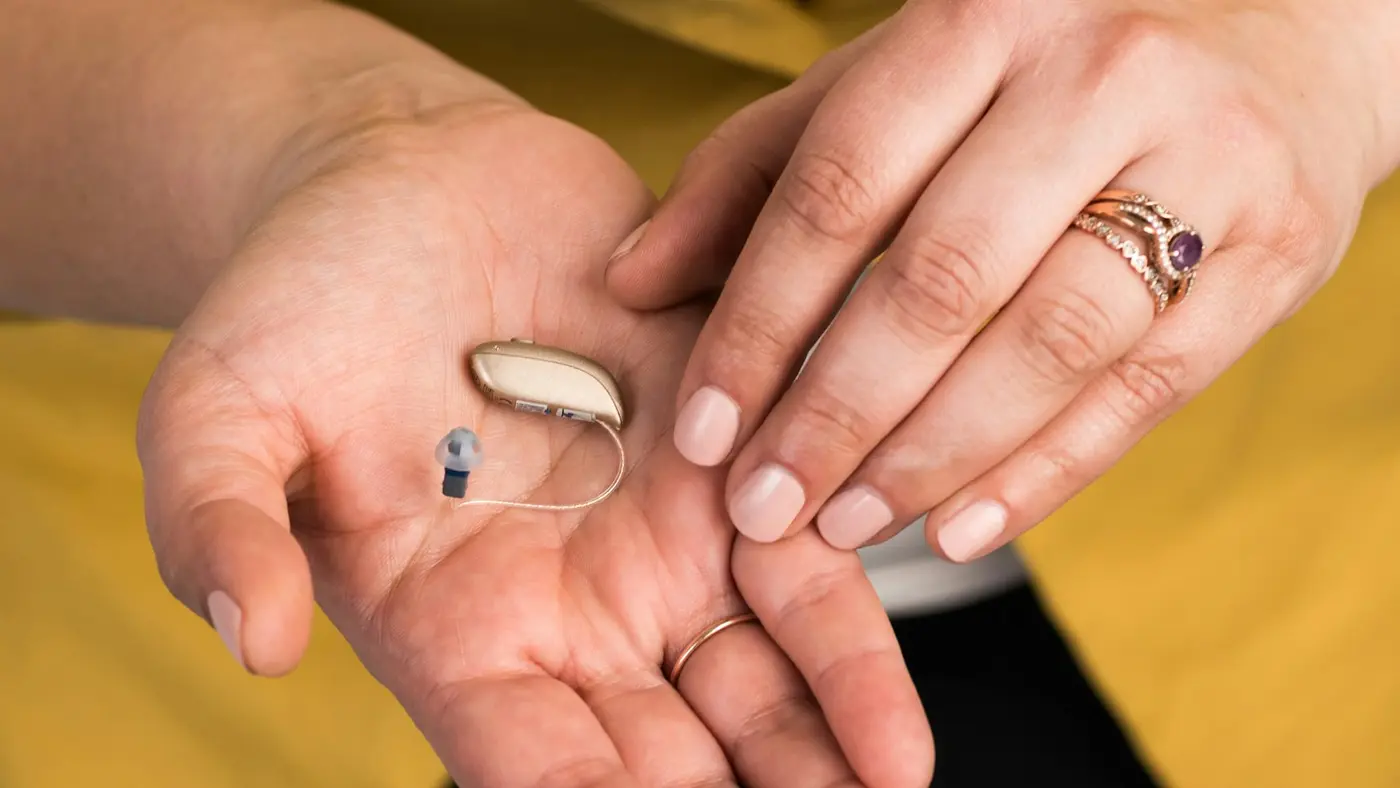
Not proven. Hearing aids make everyday life easier, but a big trial didn't find they slowed thinking decline for most people.
Hearing aids clearly help you hear and talk with people, but the best trial found they didn't slow thinking decline overall. A possible benefit in higher-risk people needs confirming. ACHIEVE is the best test so far: 977 people aged 70 to 84 with untreated hearing loss got either hearing aids or health lessons. After 3 years, thinking scores had fallen by the same amount in both groups. Among 238 people who were older and had more risks, decline was 48% smaller with hearing aids, but the other 739 healthier volunteers got no benefit. In neither group did hearing aids clearly lower the chance of cognitive impairment, and the trial was too short to judge dementia. In long-term studies, people who wear hearing aids had a 17% lower rate of dementia. But people who get and wear hearing aids may be healthier and better off to start with.
Who this applies to: Older adults with hearing loss. This is not medical advice. If you're having trouble hearing, or you're worried about memory, talk to your doctor.
Moderate evidenceOne good 3-year randomized trial with no overall effect on thinking, plus observational studies that suggest lower risk but can't show cause. The trial was too short to judge dementia.
What are the key numbers?
Which studies is this answer based on?
- Lin, F. R., Pike, J. R., Albert, M. S., Arnold, M., Burgard, S., Chisolm, T., et al. (2023). Hearing intervention versus health education control to reduce cognitive decline in older adults with hearing loss in the USA (ACHIEVE): a multicentre, randomised controlled trial. The Lancet, 402(10404), 786–797. doi:10.1016/s0140-6736(23)01406-x
What does this mean for you?
- Hearing loss is linked with more dementia. That doesn't tell us whether fixing hearing lowers the risk, because the two could share causes.
- The 48% slower decline in the headlines comes from one quarter of the people in the trial. The analysis was planned in advance, but it isn't the main result, and the larger group showed no benefit.
- Some thinking tests are read aloud. People who can't hear well may score lower for that reason alone. When two of these papers checked, though, this didn't seem to explain their results.
- 16.5% of the comparison group got hearing aids on their own, which would make a real effect harder to see.
What did the studies find?
- Lin 2023, ACHIEVE (977 people aged 70 to 84, 3 years): thinking fell 0.200 SD with hearing aids vs 0.202 without, difference 0.002 (−0.077 to 0.081).
- ACHIEVE, higher-risk heart-study group (238 people): difference 0.191 SD (0.022 to 0.360), 48% less decline. Healthy volunteers (739 people): −0.061 (−0.151 to 0.028), no benefit.
- ACHIEVE, new cognitive impairment: HR 0.90 (0.61 to 1.33) overall and 0.94 (0.54 to 1.64) in the higher-risk group, so no clear effect.
- Yeo 2023 (31 studies): hearing aid users had less cognitive decline, HR 0.81 (0.76 to 0.87, 8 observational studies, 126,903 people), and less dementia, HR 0.83 (0.77 to 0.90, 4 studies). Only 3 of the 8 adjusted for money and social position. The authors rated certainty as low.
- Loughrey 2018 (36 observational studies): hearing loss linked with 28% higher odds of dementia, OR 1.28 (1.02 to 1.59), in 3 cohorts.
- Lancet Commission 2024: people with hearing loss had a higher dementia risk, HR 1.37 (1.00 to 1.87), in a new pooling of studies. That result is borderline and varied a lot between studies (I² 80%). The report sees the case for treating hearing loss as stronger than before.
How was the main study done?
Main evidence: Lin et al. (2023), ACHIEVE, The Lancet
- Design
- Randomized controlled trial, not blinded
- Sample
- 977 participants
- Who was studied
- US adults aged 70 to 84 with untreated hearing loss and no substantial cognitive impairment
- Duration
- 3 years
- Comparison
- Hearing aids with audiologist support vs health education sessions
- Who paid for it
- Public and charity funding; a hearing-aid maker donated the devices
What does the rest of the evidence say?
This sets the bottom line.
Randomized trial
What should you do?
- If you struggle to hear, get a hearing test. Better conversation is a good reason on its own.
- If you get hearing aids, wear them every day and go back for adjustments. People in the trial wore them about 7 hours a day.
- Don't buy them only as dementia prevention. If your memory worries you, talk to your doctor.
What are the main takeaways?
- Hearing aids clearly improve everyday hearing.
- They didn't slow thinking decline overall in the best trial.
- A benefit in higher-risk older adults is possible but needs another trial.
What are the limits of this evidence?
- ACHIEVE lasted 3 years, which is too short to judge dementia.
- People knew whether they had hearing aids, and some in the comparison group got their own.
- The encouraging result came from a smaller subgroup.
- Observational studies can't separate hearing aids from the kind of person who gets and wears them.
Educational summary, not medical advice. Talk to a clinician about your own health.