Should you "feed a cold, starve a fever"?
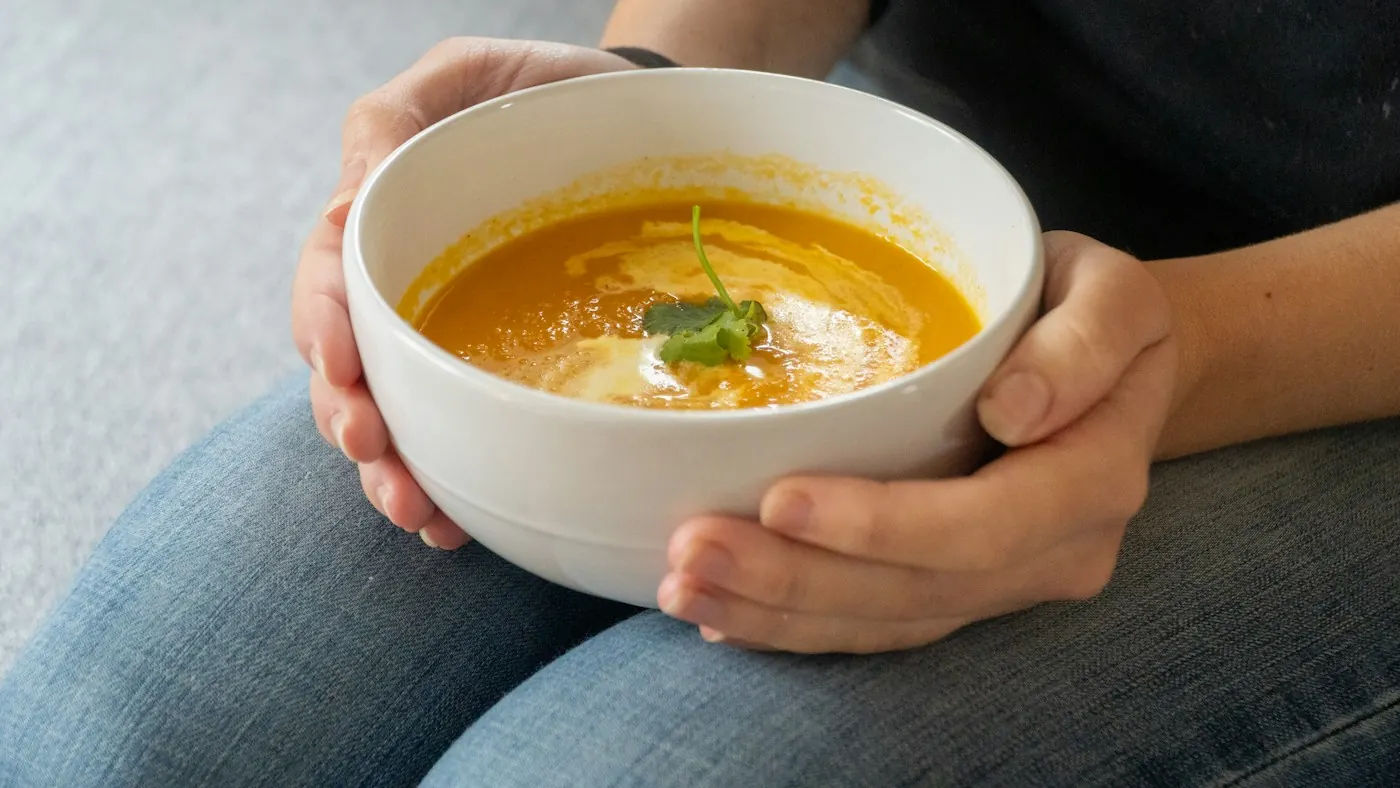
No. There's no evidence that you should eat more with a cold or less with a fever. No one has tested it in people who are ill.
No human trial has tested eating more for a cold or less for a fever. The saying isn't backed by evidence, and the studies often quoted for it were in mice or in six healthy men with no illness. Nobody has run a trial in people with colds or fevers comparing eating more with eating less. A 2024 review found little useful human data and concluded that what the body needs during an infection likely depends on the germ and the person, not on a simple cold-or-fever rule. The study that put the saying in the news measured immune signals in the blood of 6 healthy men after a meal or a fast, with no infection at all. Mouse studies found that feeding helped in a flu-like infection and harmed in a bacterial one, but mice aren't people. Even the common advice to drink extra fluids has never been tested in a trial. Losing your appetite when you're ill seems to be a normal part of the body's response.
Who this applies to: Generally healthy adults with a cold, flu or a short fever at home. This isn't medical advice. See a doctor if a fever is very high, lasts more than a few days, or comes with trouble breathing, a stiff neck or confusion, and seek immediate medical attention for severe symptoms. Babies, older adults and people with long-term illness should get medical advice sooner.
Limited evidenceThere are no human trials on eating during colds or fevers. The evidence is narrative reviews, a Cochrane review that found no trials of extra fluids, a tiny lab study in healthy men, mouse experiments, and a large trial in intensive care patients that is far from a cold at home.
Eat as your appetite allows, without forcing food or fasting on purpose
Losing your appetite during an infection seems to be part of the body's normal response, but long-term undereating harms immunity. Forcing extra nutrition didn't help very sick patients in a large trial.
Weak evidence · Exton 1997, Casaer et al. 2011 Free full text, Sankararaman et al. 2024Drink normally rather than forcing extra fluids
No trial has tested extra fluids for colds or chest infections, and some observational studies suggest too much fluid could cause harm in chest infections.
Weak evidence · Guppy et al. 2011 Free full text
What are the key numbers?
Which studies is this answer based on?
- Sankararaman, S., Venegas, C., Seth, S., & Palchaudhuri, S. (2024). "Feed a cold, starve a fever?" A review of nutritional strategies in the setting of bacterial versus viral infections. Current Nutrition Reports. doi:10.1007/s13668-024-00536-w
What does this mean for you?
- The saying is old folk advice. It has never been tested in people with colds or fevers.
- Loss of appetite during infection may be part of the body's defence, an idea that comes mostly from animal research. But long-term undereating harms the immune system.
- Mouse studies suggest feeding may matter differently in viral and bacterial infections. A cold is viral and a fever can come from either, so even the mouse results don't match the saying neatly.
- In very sick intensive care patients, holding back IV feeding for the first week didn't harm them and led to slightly fewer infections. That's a very different situation from a cold at home.
What did the studies find?
- Sankararaman 2024 (review): limited clinically useful data on nutrition in viral versus bacterial infections; needs likely depend on the specific germ and patient, not a simple cold/fever rule.
- Guppy 2011 (Cochrane): found no randomized trials of advising extra fluids for respiratory infections; some observational studies suggest extra fluids could even cause harm in chest infections.
- van den Brink 2002: in 6 healthy men, a 1,200-calorie liquid meal raised one immune signal (gamma-interferon) to 450% of baseline, while fasting raised another (IL-4) to 398%. No one was ill.
- Wang 2016 (mice): feeding increased deaths from a bacterial infection but protected against death from flu.
- Murray 1979 (mice): infected mice force-fed a normal amount died sooner than infected mice left to eat as they wished.
- Casaer 2011: in 4,640 intensive care adults, delaying IV feeding to day 8 led to slightly faster ICU discharge and fewer ICU infections (22.8% vs 26.2%), with similar death rates.
How was the main study done?
Main evidence: Sankararaman et al. (2024), Current Nutrition Reports
- Design
- Narrative review of nutrition in bacterial and viral infections
- Sample
- Mostly animal and mechanism studies, plus limited human data
- Who was studied
- People and animal models with infections
- Duration
- Not applicable (review)
- Comparison
- Feeding vs fasting in viral vs bacterial infection
- Who paid for it
- Not stated (no competing interests declared)
What does the rest of the evidence say?
This sets the bottom line.
Review or expert commentary
What should you do?
- Eat as your appetite tells you, without forcing food or fasting on purpose.
- Drink normally; there's no proof that forcing extra fluids helps.
- See a doctor if a fever is very high or doesn't settle.
What are the main takeaways?
- The saying has never been tested in people with colds or fevers.
- Feeling less hungry when ill is normal.
- Neither forcing food nor fasting has been shown to help.
What are the limits of this evidence?
- No human trials exist on this question.
- Much of the theory comes from mice.
- The intensive care trial was in very sick adults on IV feeding, not people with colds.
- The review that summarises the field didn't search the research systematically.
Educational summary, not medical advice. Talk to a clinician about your own health.