Is a vegetarian or vegan diet good for your brain?
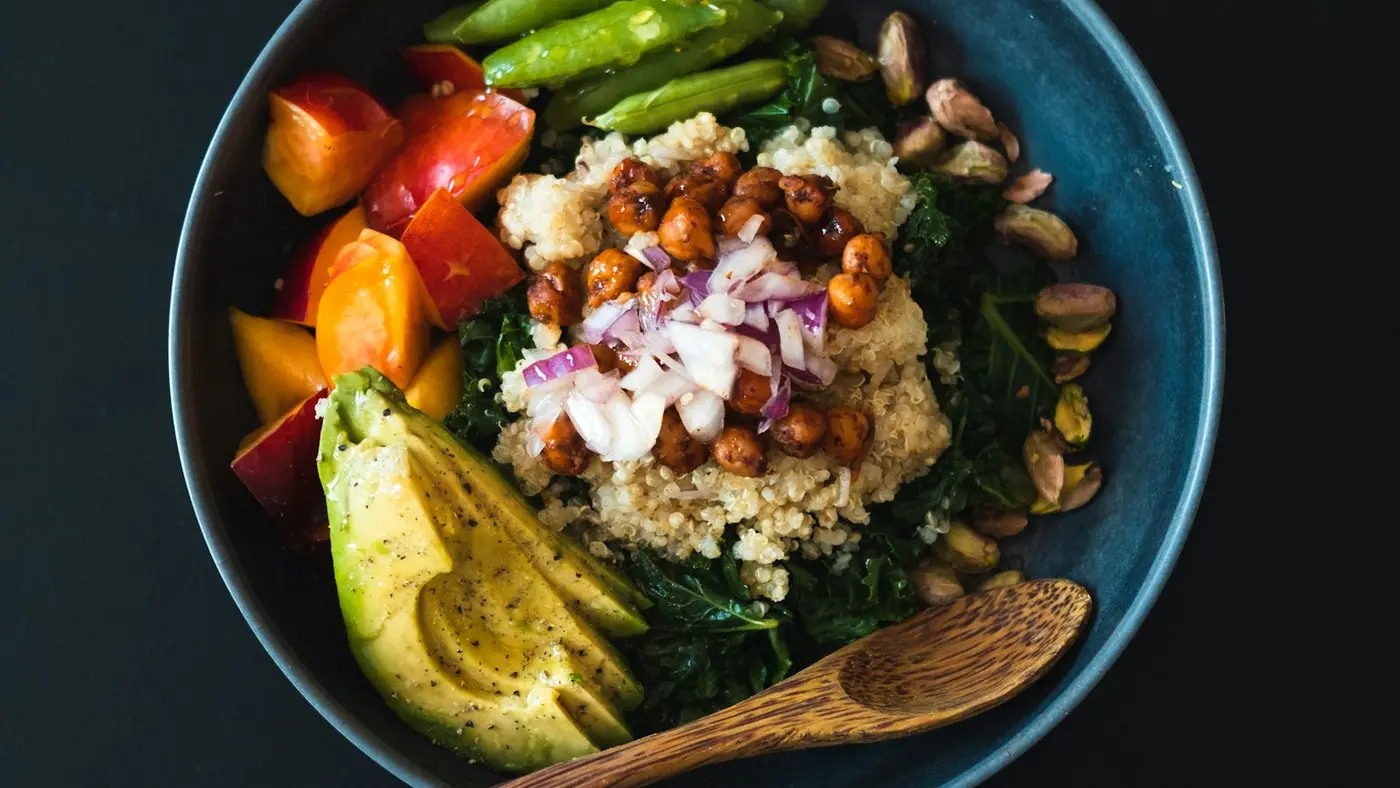
Not proven either way. A vegetarian diet isn't clearly good or bad for your memory. Eating plenty of healthy plant foods is linked with less dementia. If you eat little or no animal food, you need a plan for vitamin B12.
Studies of vegetarians and dementia disagree, healthy plant foods are linked with less dementia in some studies, and a reliable source of vitamin B12 is a must. No trial has tested whether going vegetarian protects the brain. A 2025 review found 4 studies that followed vegetarians over time, and they clash: 1 found benefit, 2 found no link and 1 found harm. The quality of plant foods may matter too. In two pooled cohorts (190,075 people), the healthiest plant-based eating was linked with about 15% lower dementia risk (hazard ratio 0.85), and unhealthy plant-based eating, such as sweets and refined grains, with about 17% higher risk (1.17). Those links lost significance when another analysis of the same group was swapped in. Two points need plain words. Stroke: in a UK study of 48,188 people, vegetarians, including vegans, had 20% more strokes than meat eaters (3 more per 1,000 people over 10 years), but 22% less heart disease (10 fewer per 1,000). Vitamin B12: it comes mainly from animal foods, so vegetarians and vegans are at especially high risk of running low. Low B12 can cause nerve, mood and thinking problems.
Who this applies to: Adults who eat, or are thinking about eating, a vegetarian or vegan diet. Most studies group vegans with vegetarians, so there is very little on vegans alone. If you have had a stroke, have other health conditions or take medicine, talk to your doctor before a big change in diet.
Limited evidenceObservational studies only, with clashing results for vegetarians and no trials. The plant food quality link comes from a few overlapping cohorts, and the stroke result from one cohort is borderline.
What are the key numbers?
Which studies is this answer based on?
- Bigras, C., Mazzoli, R., Laurin, D., Malavolti, M., Barbolini, G., Vinceti, M., Drouin-Chartier, J. P., & Filippini, T. (2025). Plant-Based Diets and Cognitive Outcomes: A Systematic Review and Meta-analysis. Advances in Nutrition, 16, 100537. doi:10.1016/j.advnut.2025.100537
What does this mean for you?
- Nobody can say from these studies that giving up meat protects memory, or that it harms it. The Taiwan (Tsai) and Adventist (Giem) studies listed below are two of the four studies in the main review, so they aren't extra proof.
- Healthy plant-based scores count foods like vegetables, nuts, beans and whole grains. They are not the same as being vegetarian.
- The healthy plant link was clear in two US cohorts and absent in a UK one. The two main papers also share cohorts, so they are not separate proof.
- On stroke, the extra risk was small in absolute terms, borderline, and mostly bleeding (haemorrhagic) strokes. For vegans alone, the numbers were too few to be clear (1.35, 0.95 to 1.92). Fish eaters had no clear extra risk. The study did not measure memory or dementia.
- Why stroke might be higher isn't known. The authors note that vegetarians and vegans in this group had lower blood levels of B12 and some other nutrients, and that this could play a part, but this study didn't test it.
- On B12, a review of patient cases says symptoms can include numbness or tingling, dizziness, depression and thinking problems, sometimes without anaemia. Stopping needed treatment can lead to lasting nerve damage, so never stop prescribed B12 without your doctor.
What did the studies find?
- Bigras 2025 (22 observational studies): strict vegetarian diets, 4 prospective studies: 1 benefit, 2 no link, 1 harm (one Taiwan cohort of 1,285 people, HR 1.68, 1.03 to 2.75). Plant-based scores, dementia, top vs bottom fifth: healthful HR 0.85 (0.75 to 0.97), unhealthful HR 1.17 (1.03 to 1.33), overall HR 1.03 (0.91 to 1.17).
- Shen 2026 (five-cohort pool, 207,981 people, 3,855 cases): top vs bottom third, healthful HR 0.79 (0.65 to 0.98), unhealthful HR 1.24 (1.08 to 1.42), overall HR 0.84 (0.66 to 1.06). In the UK Whitehall II cohort alone, healthful HR 0.99 (0.69 to 1.44).
- Tsai 2022 (4,891 Taiwanese adults, 121 cases): vegetarians HR 0.67 (0.45 to 0.996) after adjustment, 0.80 (0.54 to 1.17) before. Already counted in Bigras 2025.
- Giem 1993 (from the abstract): 272 matched people, meat eaters RR 2.18 (p=0.065), or 2.99 (p=0.048) once past meat eating was counted; 2,984 unmatched people, no significant difference, though that group had limited power to detect an effect of heavy meat eating. Already counted in Bigras 2025.
- Tong 2019, EPIC-Oxford (48,188 people, 18 years): vegetarians vs meat eaters, all stroke HR 1.20 (1.02 to 1.40), 3 more per 1,000 over 10 years (0.8 to 5.4); haemorrhagic stroke HR 1.43 (1.08 to 1.90); ischaemic heart disease HR 0.78 (0.70 to 0.87), 10 fewer per 1,000 (6.7 to 13.1). The heart disease link shrank to 0.90 (0.81 to 1.00) after adding cholesterol, blood pressure, diabetes and body mass index; the stroke link did not shrink.
- Wolffenbuttel 2019 (review): because B12 is mainly in foods of animal origin, vegetarians and vegans are at especially high risk of deficiency, which is often overlooked or misdiagnosed.
How was the main study done?
Main evidence: Bigras et al. (2025), Advances in Nutrition
- Design
- Systematic review of observational studies with small meta-analyses
- Sample
- 22 studies; dementia results pooled from two European cohorts (190,075 people)
- Who was studied
- Adults in several countries
- Duration
- Varied by study
- Comparison
- Vegetarian or more plant-based eating vs not or less
- Who paid for it
- Public/academic; one author reports consulting, grant and speaking links with Dairy Farmers of Canada
What does the rest of the evidence say?
This sets the bottom line.
Meta-analysis or systematic review
What should you do?
- Build meals around vegetables, beans and nuts, and go easy on sweets, sugary drinks and refined grains.
- Make sure you have a reliable source of vitamin B12. Ask your doctor how, and whether you need a blood test.
- Get your blood pressure checked, and seek immediate medical attention for any sudden signs of a stroke.
What are the main takeaways?
- Being vegetarian isn't clearly linked with better or worse brain health.
- Healthy plant foods are linked with less dementia, but that's not proof.
- Plan for vitamin B12, and look after your blood pressure. Talk to your doctor.
What are the limits of this evidence?
- No randomized trials have tested vegetarian diets and dementia.
- Most studies can't separate vegans from vegetarians.
- The pooled plant-based results rest on only two cohorts each, with very mixed results for some outcomes.
- The Taiwan vegetarian study covered one Buddhist community, and its cases included mild cognitive impairment.
- The stroke study was mostly white, health-conscious UK adults, and counted only 300 haemorrhagic strokes.
- The B12 paper is a narrative review with patient cases, not a trial. It didn't measure dementia in vegetarians.
Educational summary, not medical advice. Talk to a clinician about your own health.